The 48-Hour Alpine River Plan
Touch down at Ljubljana Airport (LJU) or Venice Treviso (TSF) on Friday afternoon. Drive directly north towards Bovec in the Upper Soča Valley via the Predil Pass or through Kranjska Gora over the Vršič Pass. Travel time is roughly 1 hour 45 minutes from Ljubljana. Check into an alpine lodge in Bovec and arrange equipment logistics with a certified local white-water base.
Saturday morning is dedicated to Sušec Canyon. It serves as the ideal warmup venue with minimal objective risk, offering natural water slides carved by glacial debris and cliff jumps ranging from 2 to 7 metres. The approach hike requires 35 minutes of uphill pacing through beech forests. The water descent takes 2 hours of continuous wading, sliding, and swimming. Refuel in Bovec village at midday with local trout and mountain dumplings.
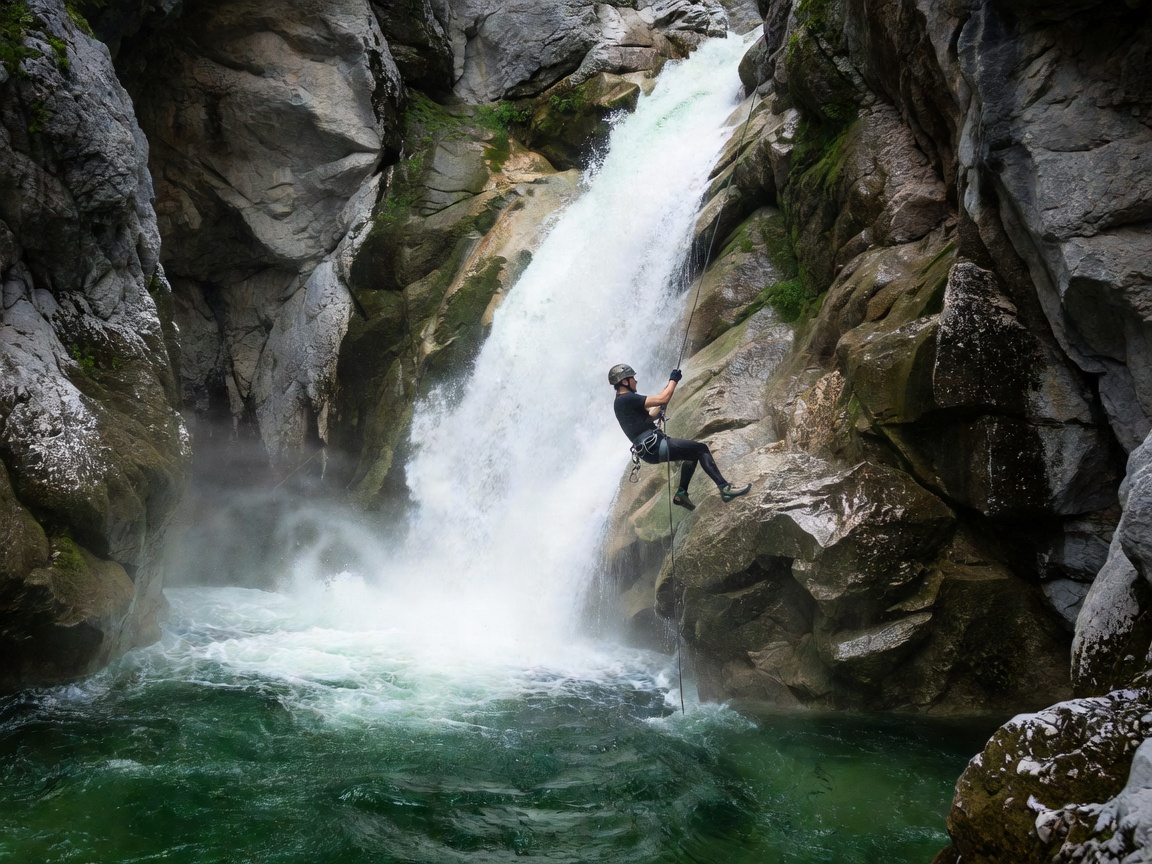
Saturday afternoon or Sunday morning challenges you with the advanced canyon: Fratarica or Kozjak. Fratarica cuts directly into the sheer face of the Loška Stena wall, featuring the 48-metre Parabola waterfall descent on twin static ropes. Finish your technical descents by 13:00 on Sunday, dry your thermal gear, enjoy an espresso on the village square, and drive back across the alpine passes to catch your flight home.
Canyon Sector Specifications & Verticality
| Gorge Sector |
Approach Hike |
Highest Waterfall Rappel |
Highest Jump Option |
Technical Rating (FFME) |
| Sušec Gorge |
35 min forest trail |
12 m (optional slide) |
7 m into deep pool |
v2 a2 II |
| Fratarica Canyon |
60 min steep mountain trail |
48 m (Slap Parabola) |
5 m (deep pools only) |
v4 a3 III |
| Globoški Potok |
80 min alpine scramble |
55 m double-pitch |
No jumps (rope only) |
v5 a2 IV |
| Kozjak Gorge (Lower) |
20 min valley walk |
15 m into dark chamber |
6 m into natural basin |
v3 a3 II |
Hypothermia Mitigation and Neoprene Tolerances
The waters of the Soča basin originate directly from high-altitude subterranean karst aquifers inside Triglav National Park. Even in July and August, river water temperatures rarely exceed 10°C. Standard surf or paddleboard wetsuits will leave you hypothermic and shivering uncontrollably within 45 minutes of river entry.
Thermal Protection Architecture
You must wear a two-piece 5mm or 7mm reinforced canyoning wetsuit featuring an integrated hood and durable rubber protective scuff patches on the seat and knees. Pair this with 3mm neoprene socks, full neoprene gloves, and high-friction sticky-rubber canyoning boots that grip wet limestone without slipping.
Rigging Hardware & Harnesses
Use a certified canyoning harness fitted with a replaceable heavy PVC butt protector (culotte) and dual dynamic rope cows-tails with locking carabiners. Rappelling down wet waterfall lines requires a specialized figure-8 descender (such as a Pirana) that allows rapid friction modulation while suspended in heavy hydraulic spray.
Hydraulic Hazard Analysis: Reading Siphons and Undercuts
Limestone geology creates complex hydraulic hazards under water level changes. Siphons (submerged rock holes that suck water through underground channels) and recirculating aerated boils beneath waterfalls can trap a swimmer regardless of life-jacket flotation. Always scout plunge pools from above, verify pool depth with a weighted rope line before jumping, and follow the flow lines designated by licensed guides who monitor seasonal flow rates daily.